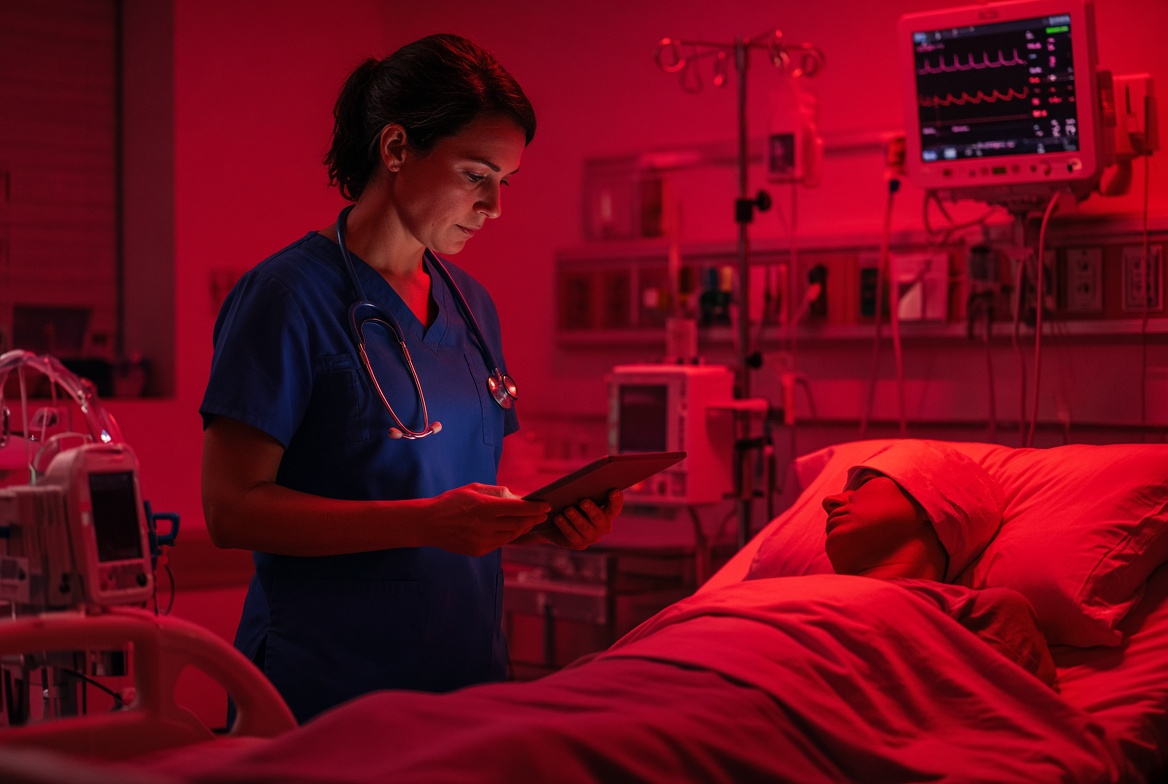
Most safety events don’t happen because a caregiver didn’t know the protocol — they happen because the right piece of information wasn’t visible in the moment it mattered. Aceso puts safety-critical context on the door and at the bedside, automatically.
Here’s how the Aceso approach turns this priority into results at your hospital — each capability plays a distinct role, and the impact compounds where they overlap.
Fall risk, isolation precautions, allergies, and safety flags pull directly from the EHR onto the door board and in-room display — visible the moment anyone enters.
Covering staff, transporters, and visitors see the same safety context the primary nurse does — no separate lookup, no reliance on memory.
Subtle on-screen cues for hourly rounding or repositioning tied to Braden score — reinforcing protocol without adding to alarm fatigue.
The information existed — it just wasn’t visible in the moment.
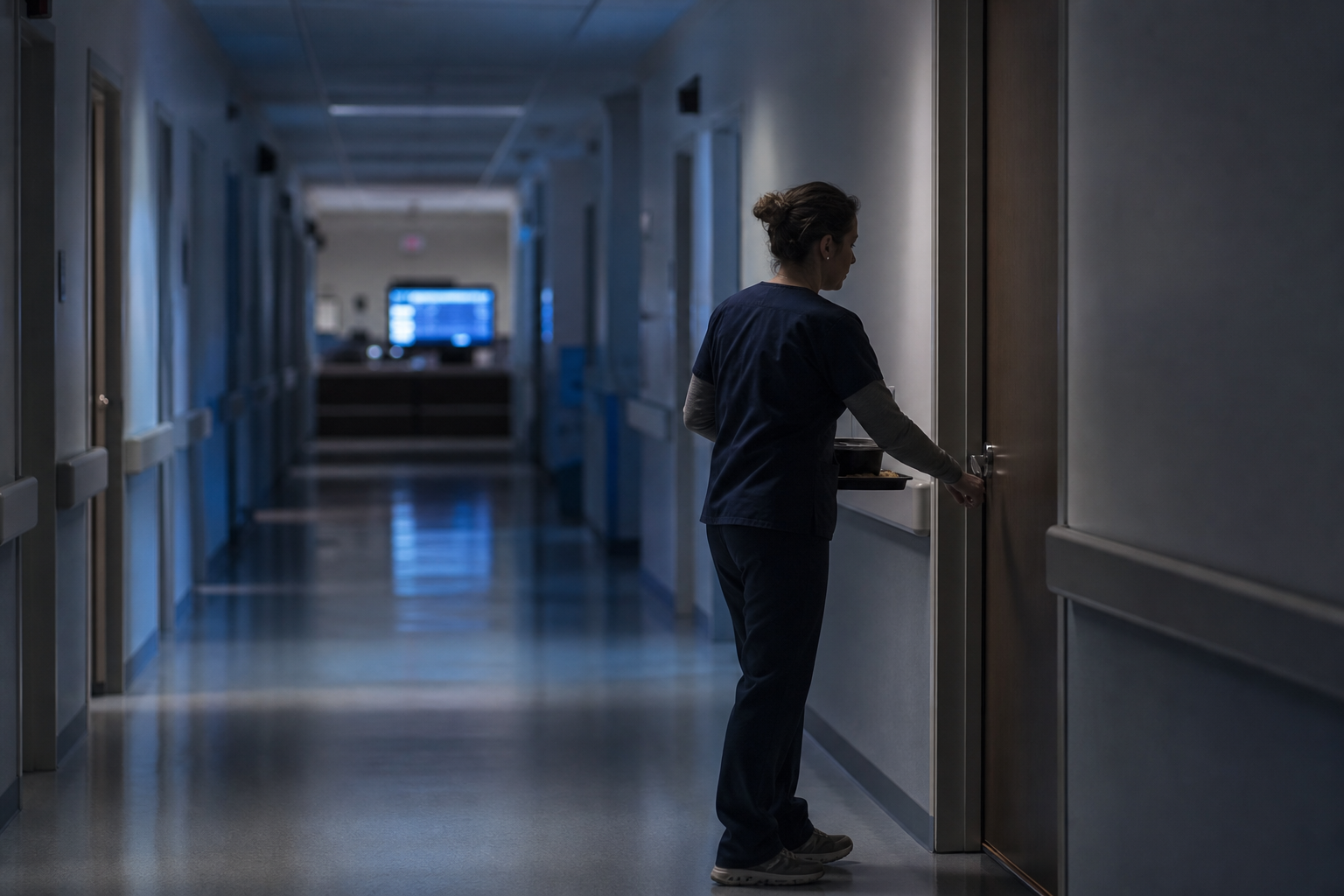
Every caregiver sees the risk before they enter.
Each journey pairs the right Aceso solutions to a specific outcome for this mission. Pick one to see it in action.
Each journey shows the Aceso solution, what it means for your patients, care team, and executives — then lets you experience it and create a brief to share.
Fall risk status, isolation precautions, and safety flags pull directly from the EHR onto the door board — so every caregiver, transporter, or visitor sees the risk before they enter.
Braden score, pain scale, medications, allergies, and goals of the day appear on the in-room display — the safety-critical context is visible the moment anyone is at the bedside.
A gentle on-screen cue for hourly rounding, a repositioning reminder tied to Braden score — subtle, contextual prompts that reinforce protocol without adding another alarm.
Safety extends to the transition home: Aceso reveals readiness and comprehension gaps, aligns the team, and resolves the barriers that lead to avoidable harm and readmission.
Mission: Patient Safety — No Preventable Harm